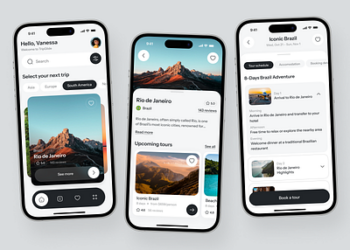
Are you tired of clunky apps and websites that make you jump through hoops just to get things done? The future of user interfaces is here – and Artificial Intelligence powers it.

AI is transforming how we interact with technology, replacing static screens with dynamic, personalized experiences that understand you.
This is more than just a fresh coat of paint. We’re talking about a complete change in how we speak to our devices. The whole idea is moving away from making us learn how a machine works. Instead, the machine is understanding how we work.
Soon, you might just tell an app what you want, and the screen will change to help you get it done. It’s a shift that forces us to rethink our relationship with tech, moving from being the one in total control to being a collaborator.
Ready to explore how your next UI won’t just be a screen – it’ll be your most intelligent assistant yet?
An Interface That Knows You

Ever wonder how your streaming service just knows you’d love that obscure documentary? Or how does an online store show you precisely the sneakers you were thinking about?
That’s AI doing its thing. But now, it’s going way beyond just recommendations. This is hyper-personalization, and it’s one of the biggest game-changers for user interfaces.
By paying attention to how you use an app—what you click on, what you ignore—AI can start to customize the experience just for you, right in the moment. This means it can shuffle the layout to put your favorite features front and center or tweak the workflow to match your habits.
Think of it like an innovative travel app that sees you’ve just landed in a new city. Instead of searching, it automatically pops up your hotel info and a map. It’s that kind of intuitive help that makes technology feel less like a clunky tool and more like a buddy who gets you.
Building a Design on the Fly with Generative UI

Now, this is where things start to feel like they’re straight out of a movie: Generative UI. The idea is simple but powerful: instead of using a pre-built design, the AI creates bits of the interface on the spot, just for you.
Say you’re chatting with a travel bot to plan a vacation. As you mention dates, the AI could instantly create and show you a custom calendar to pick from. When you talk about seats, a seat map appears.
You don’t have to navigate to a different screen; the interface builds itself around the conversation.
This frees up human designers from the grunt work of creating a million different screens for every possible situation. They can focus on the big picture, defining the building blocks and rules the AI uses.
We’re already seeing tools where designers can tell the AI, “I need a booking calendar for a flight to Bali,” and it builds it. It’s fast, smart, and opens the door to designs that feel alive.
Finally, a Web That Works for Everyone

Beyond the cool factor, AI is tackling something vital: making the web usable for everyone. Accessibility—making sure people with disabilities aren’t left out—has always been a tough nut to crack in design, and honestly, it’s often an afterthought.
AI is like a tireless helper here. It can automatically check designs for problems like bad color contrast that make text hard to read, or flag images that are missing descriptions for screen readers.
For users, AI can offer on-the-spot help, such as converting text to speech, increasing font sizes, or adapting a site’s functionality for users who can’t use a mouse. By handling this automatically, AI is helping build a more inclusive digital world.
So, What Do the Human Designers Do?

If AI is doing all this design work, are human designers out of a job? Not at all. Their job is just changing—and arguably, it’s getting more interesting. With AI handling the repetitive, tedious stuff (like A/B testing or crunching user data), designers have more time to focus on what humans do best: empathy, strategy, and pure creativity.
Their role is becoming more like a creative director or a conductor. They set the vision, teach the AI what “good design” looks like, and ensure the end product genuinely helps and doesn’t frustrate real people. AI is a mighty hammer, but the designer is still the architect who knows where and how to build.
The Big Ethical Questions
Of course, all this amazing tech comes with a hefty dose of responsibility. We can’t talk about AI without talking about the tricky stuff. Privacy is a big one. To personalize your experience, AI needs data. It’s just got to be done in a way that’s open and honest, where users know what they’re sharing and have control over it.
Then there’s the issue of bias. AI learns from the data we give it. If that data is biased, the AI will be too, and it could end up creating experiences that are unfair or exclusionary.
It falls on the shoulders of developers and designers to build fair systems and to be transparent about how they work. Trust is everything.
AI is writing the future of how we use our screens. It’s exciting, a little scary, and full of potential. But at the end of the day, the goal hasn’t changed.
It’s still about making technology that serves people, making our lives a little bit easier and maybe even a little more enjoyable.