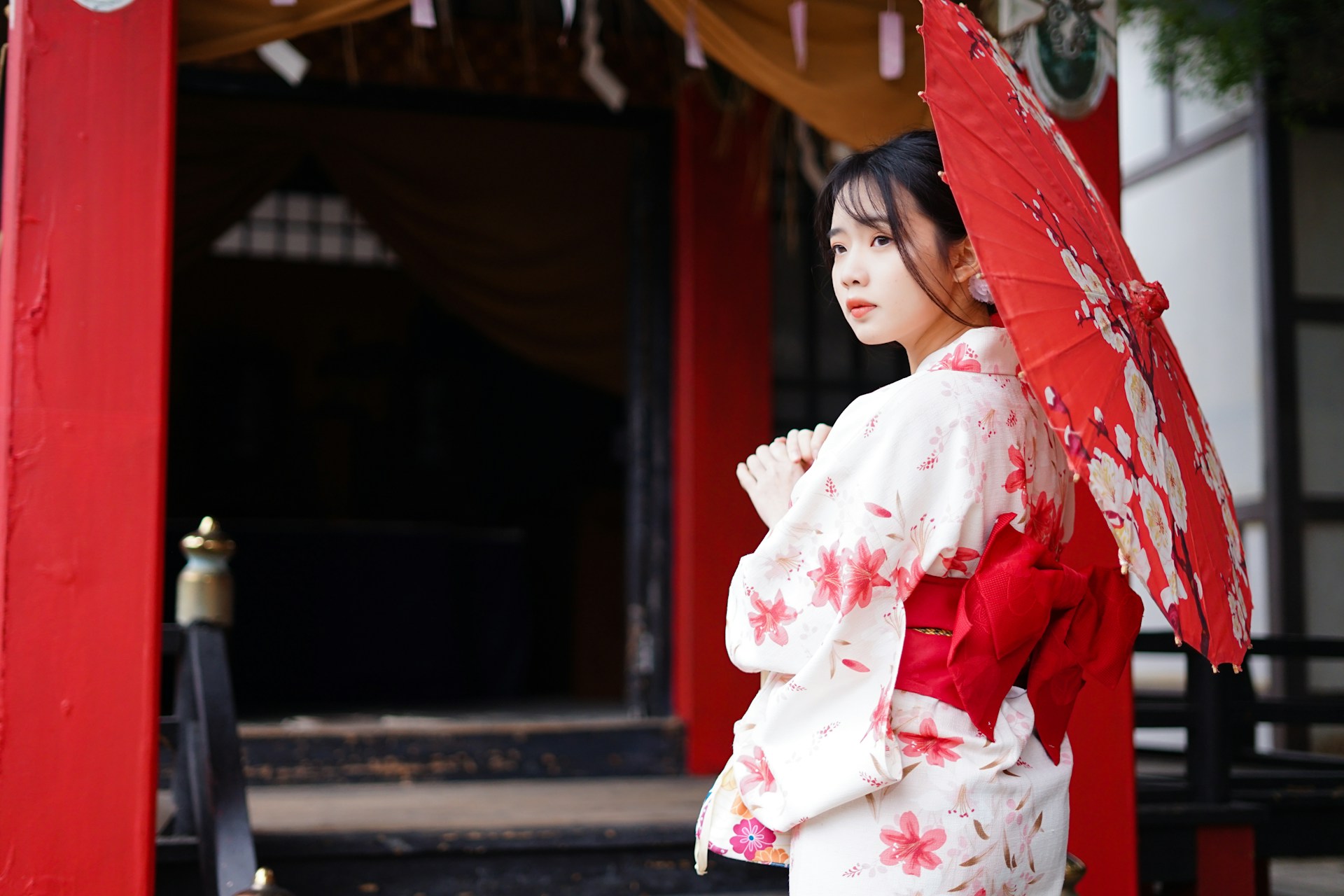
Apart from being known for its advanced technology, Japan still holds on firmly to its culture. This country has successfully become a nation that combines both tradition and modernity.

One of its popular cultures is the Kimono. This traditional dress is one of the most famous garments worn in Japan. In recent days, it has been worn only sparingly or during special occasions such as weddings, tea ceremonies, formal traditional events, and funerals.
The history of the Kimono is full of meaning. It’s not just a piece of clothing but a fabric that reflects the traditions, cultures, and values of Japan.
Kimono means “thing to wear”. It is made up of two Japanese words: ki, meaning “to wear”, and mono, meaning “thing”.
If you think a Kimono is only worn by women, you’re (kind of) wrong because it is also worn by men. This traditional cloth comes in many different types, categorized by gender, age, marital status, and occasion.
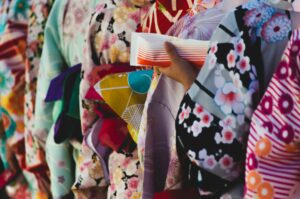
To this day, when it comes to wearing a kimono or yukata on special occasions like weddings or ceremonies, Japanese people still believe in specific colors and designs.
Now, let’s talk about the color. Like other cultural beliefs, Japan also has its interpretation of color, which carries special meaning.
For example, they believe that the combination of blue-green colour that represents water will bring good fortune for those who wear it.
But actually, the color of a kimonos can be interpreted in many ways. According to Chopa, the most essential color, according to Japanese culture, is green, which represents new beginnings and good fortune.
In this article, we’ll explore the cultural meanings behind the colours used in Kimono.
Black (Kuro)
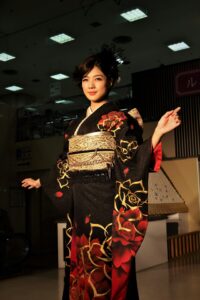
In Japanese culture, black is a colour of dignity and formality. It is also associated with mystery, the night, and the infinite. Others said that black is a prized choice in Japan.
The blackness in kimonos also carries darkness, misfortune, and mourning. Kimonos in black are typically worn for formal occasions, for example, it can be seen as a symbol for widowed women who lost their spouse to death.
Green (Midori)
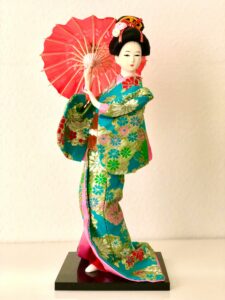
This color is one of the most popular ones, especially when Japan itself loves nature, plants and foliage. Green is a symbol of luck, growth, and renewal concepts in Japanese folklore and tradition.
In Japanese culture, green is more than just a color, it symbolizes resilience, harmony, the eternal cycle of life, and the rhythms of life. A green kimono can be worn for various occasions, but it fits for spring and summer events or those occasions associated with nature and new beginnings.
Red (Aka)
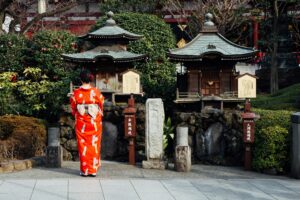
Red is also an important color in Japanese culture. It’s often used to represent passion and joy. It is also a symbol of happiness, good fortune, and protection against evil.
Red plays a significant role during the New Year’s festivities, symbolizing good fortune, happiness, and prosperity for the year ahead. Not only the Kimono, red is also used for New Year decorations to traditional wedding attire, representing the spirit of celebration.
Blue (Ao)
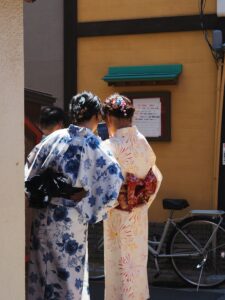
This color has many meanings in Japanese culture. It is often associated with coolness, passivity and loyalty which are all seen as positive traits. Blue is also considered a color associated with fortune.
This color is significant during the New Year’s celebration, it is used for decorations and kimono attire as a symbol of hope, renewal, and the promise of a new beginning.
Gold and silver
Both of these colours mean wealth and value in Japan. Even gold has been a popular choice for centuries to represent the color of wealth and power.
These two elements are used to show great significance and prestige. It provides an elegant touch that can be found in many different art–including in Kimono design. Gold and silver are often used to create a rich symphony of color.
Kimonos with gold and silver are commonly seen at weddings, festivals, and other significant events.