Jewelry has always been more than just decoration — it tells stories, reflects power, and evolves with time. From royal crowns to modern statement pieces, each era brought unique trends shaped by art, culture, and politics.

Whether made of gold, glass, or recycled plastic, jewelry reveals how we define beauty, status, and identity. In this article, we’ll explore how jewelry design has transformed from the Medieval period to today’s experimental styles.
For instance, in the 1940s, jewelry with bold and oversized designs became popular as more women entered the workforce. Necklaces with a locket pendant and stud earrings were among the most commonly worn pieces during that time.
Different cultures have assigned different values to jewellery, for instance, the curse of Kohinoor and the healing powers of Emeralds. According to Fashion Psychology, jewellery defined the class and status of the wearer.
“We live in a society where we are obsessed with the brands around us, and the need to belong to a certain social status can even lead to addictive relationships with particular luxury brands,” said Diba Jedo, the author and expert from Fashion is Psychology.
Medieval Era (5th-15th Century)
Jewellery has existed since the ancient era. During that time, handmade jewellery from such unendurable articles was made and worn. But, let’s just jump into the Medieval Era since some history (about jewellery) is buried with the dead.
In the medieval era, Western Europe was plagued by war and famine. It was difficult for people to survive and focus on the development of art and technology.
As a result, the jewellery worn during this period reflected the stark differences between nobility and commoners. The rich one wore silver, gold, and precious gems while the commoners could only afford jewelry from everyday metals like copper.
Jewelry in the Victorian Era (1837–1901)
Queen Victoria was a fashion icon, and jewelry during her time showed it. Early Victorian styles were all about romance — hearts, flowers, ribbons — often made with pearls and sentimental stones.
Mid-Victorian pieces got darker (literally) with mourning jewelry made from jet and garnets. Then by the late Victorian period, natural motifs like birds and insects became trendy, along with influences from Japanese art and the Arts & Crafts movement.
Edwardian Era (1901–1915)
Picture lace — but in jewelry form. This era loved all things elegant, with platinum being the go-to metal (super strong and perfect for delicate designs). Filigree work, tiny beaded edges (called millegrain), and floral patterns were popular. Diamonds and pearls were the stars of the show, often worn as long necklaces or fancy chokers.
Art Nouveau (1890–1910)
The period was named after the 1895 opening of Siegfried Bing’s Persian Gallery ‘Maison de l’Art Nouveau’. This era is a celebration of free form, Art Nouveau was dreamy, artsy, and way different from the past.
Designers are often inspired by flowing shapes, dreamy faces, dragonflies, and flowers to create jewellery. Instead of just diamonds, they used opals, moonstones, and glass. Also, a popular characteristic of this period was the use of enamel on jewellery.
Plique-a-jour and Champlevé were the two famous enamel used in the coating of jewellery of this era.
Art Deco (1920–1935)
Enter bold lines, bright colors, and serious sparkle. Art Deco drew inspiration from Egyptian art, Cubism, and machines. Platinum was the primary metal used for jewellery in this period.
Think diamonds with emeralds or sapphires, often mixed with black onyx or coral. Jewelry from this era was sleek, modern, and made to stand out.
Retro Era (1935–1950)
During WWII, platinum was scarce, so gold took over — predominantly yellow and rose gold. Designs were chunky, curvy, and full of flair. Bright stones like aquamarine, citrine, and amethyst added drama. Think old Hollywood glamour in jewelry form.
Mid-Century Modern (1950–1970)
Minimalism took the spotlight after the war. Jewelry became sleek and abstract, with fewer gemstones and more silver, stainless steel, or textured gold. It was all about understated elegance with a futuristic twist.
Contemporary Era (1970–Now)
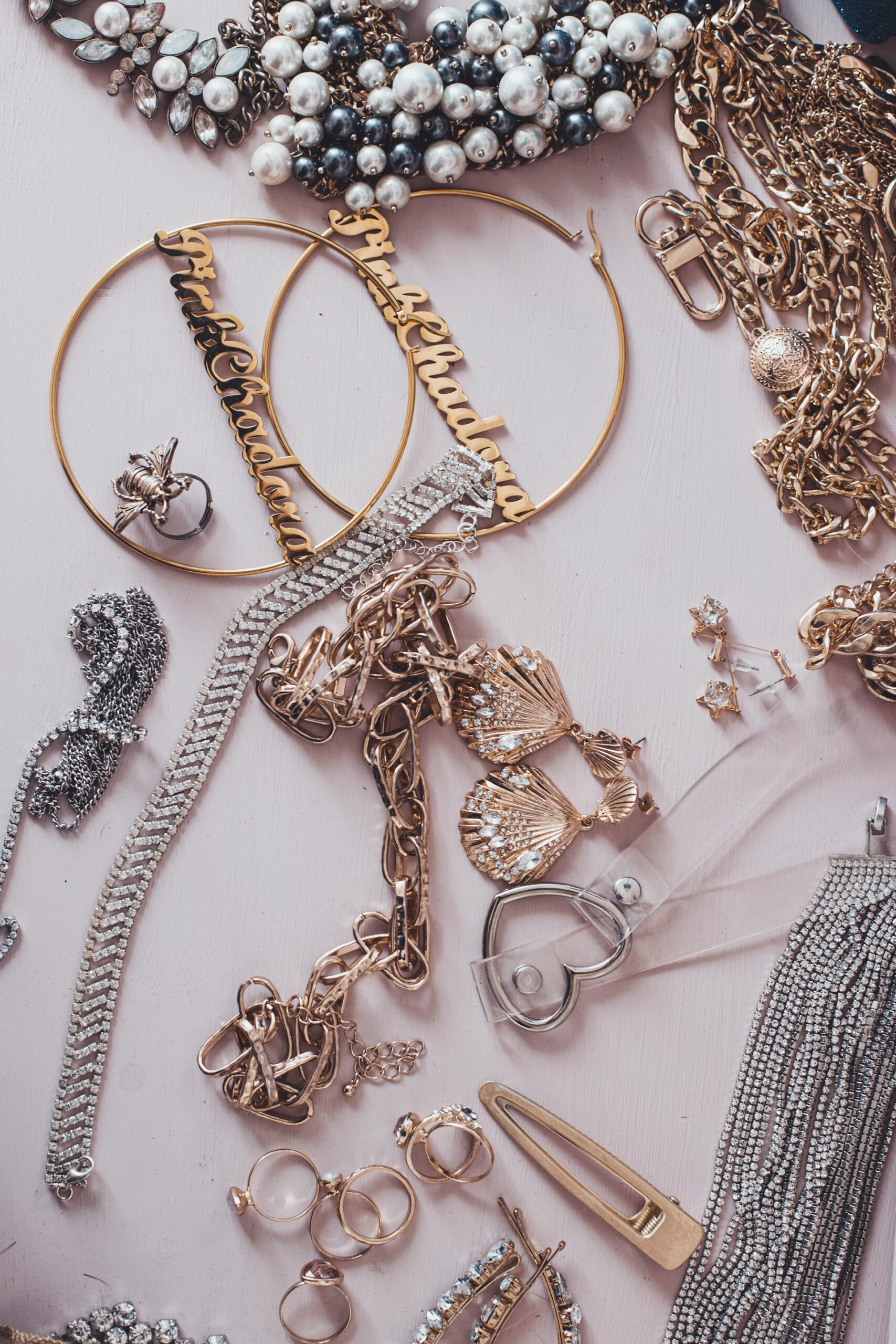
Designers now mix traditional and experimental styles like people using resin, recycled materials, natural stone, plastic beads, and even 3D printing to make their own jewellery. From personalized name necklaces to bold statement pieces, modern jewelry shows self-expression and sustainability.