Design is everywhere—from the environments we navigate, the objects we use, to the experiences we encounter. In all these aspects, design plays a crucial role in shaping the world we live in today. It blends functionality and aesthetics to create spaces, products, and systems that improve the quality of life for their users.

Often without realizing it, design significantly influences the spaces we inhabit—whether at home, in the workplace, or in public areas. For instance, well-thought-out interior design can create environments that are not only visually appealing but also comfortable and functional.
On the other hand, architectural design affects how we interact with buildings and spaces on a larger scale—from urban traffic flow to the accessibility of public facilities. Good design always prioritizes ease of navigation while maintaining pleasing aesthetics.
The common thread between designing a well-functioning city and creating an intuitive application lies in one core principle: focusing on the user. Whether it is a pedestrian seeking the fastest route or an app user trying to complete a task, their needs and experiences must come first.
Understanding how people move, think, and interact with their environment is the key to creating solutions that are both effective and enjoyable. This approach brings us to the central concept of Human-Centered Design (HCD).
Human-Centered Design (HCD)
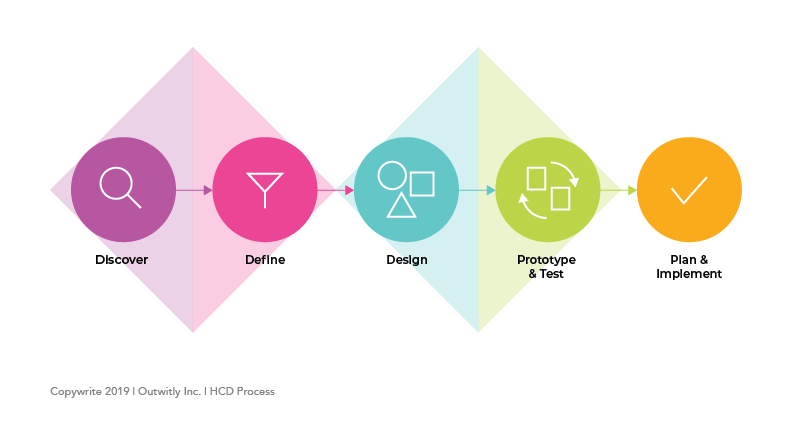
Harvard Edu’s blog explains that human-centered design is a problem-solving technique that places real people at the center of the development process. This enables the creation of products and services that resonate and align with the needs of their audience.
The goal of human-centered design is to consistently consider the desires, constraints, and preferences of users at every stage of the process. This results in products that are more intuitive and accessible.
Most likely, it also generates higher profitability, since customers feel that their needs have been considered—making them more inclined to engage with the product.
One example of HCD that continues to be applied today is the children’s toothbrush. In the mid-1990s, Oral-B asked the global design firm IDEO to develop a new toothbrush for children. Instead of copying existing models, the company designed a version that was slimmer and shorter, tailored specifically for kids.
The Stages of Human-Centered Design (HCD)
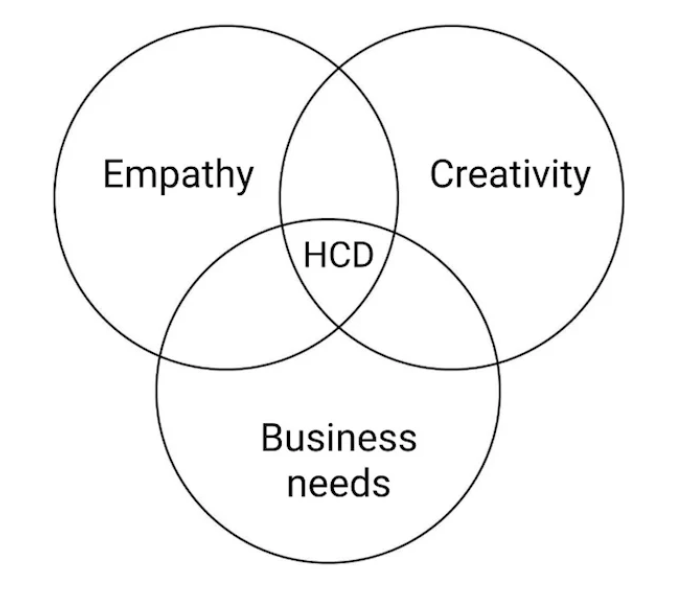
Through Harvard Business School’s online course on design thinking and innovation, Dean Srikant Datar outlines four stages of human-centered design: clarify, ideate, develop, and implement.
The first stage, clarification, requires designers to gather data and observe customers. Instead of building products on assumptions, user research is needed to evaluate real needs. The second stage is about processing insights and generating ideas.
During this stage, various design thinking tools can be applied, such as Systematic Inventive Thinking (SIT). Afterward comes development—turning ideas into feasible solutions. In this process, three key factors must be considered:
- Whether the innovation meets user needs.
- Whether it is functionally viable.
- Whether it is sustainable.
Finally, in the implementation stage, communicating the value of the innovation to stakeholders is crucial. This ensures successful market adoption and long-term growth.
Case Studies of Human-Centered Design (HCD)
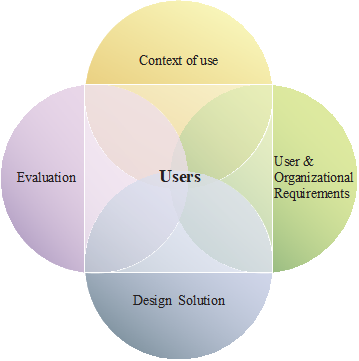
Human-centered design is not only a tool for creating user-focused products and services. But also a way to develop organizational strategies that align with people’s needs. By prioritizing customer needs, emotions, and experiences, HCD improves customer satisfaction and profitability alike.
Its implementation has proven successful across industries. For instance, Airbnb developed a platform that fosters personal connections between hosts and guests. Similarly, by applying HCD, IBM created a mobile app for its salesforce that was intuitive to use and significantly boosted productivity.
Looking ahead, HCD is expected to play a pivotal role in shaping AI-driven solutions. Human-centered design is more than a methodology—it is a mindset that places people at the forefront of innovation.
Applying HCD allows businesses to enhance customer satisfaction, generate more revenue, and outperform competitors. While challenges exist, they can be overcome through strategies such as starting small, investing in training, and fostering collaboration.