Countries like Indonesia, Japan, Taiwan, the Philippines, and Turkey are no strangers to earthquakes. Located along major tectonic plate boundaries, these regions experience frequent seismic activity, making earthquake-resistant architecture buildings not just smart—but essential.

While no building is entirely immune to earthquakes, modern engineering has made it possible to design structures that minimize damage, protect lives, and keep essential services running even after a major tremor.
To make a building resistant to earthquakes, it must be designed with a specific structure, design, and material. It also needs to be built based on their location, as each country has unique soil types and faces varying earthquake risks.
One of the main elements of any earthquake-resistant building is base isolation. These systems are used worldwide and are most prevalent in New Zealand, India, Japan, Italy, and the United States.
But more than that, there’s another aspect of how each country constructs its buildings. Let’s skip the theory and look at three real-world architectural marvels built to survive massive earthquakes.
Sabiha Gökçen International Airport in Istanbul

As we mentioned before, Turkey is one of the countries with a high risk of earthquakes. It’s one of the most popular cities, and Istanbul sits close to the North Anatolian Fault, one of the most active and dangerous fault lines on the planet.
Sabiha Gökçen International Airport, which is located in Istanbul, isn’t just one of the city’s major transportation hubs. This place is also one of the most earthquake-resistant buildings in the world and one of the largest seismically isolated buildings on Earth.
Engineers from Ove Arup made sure to go all out when designing the airport. They equipped the terminal with 300 base isolators, allowing it to withstand earthquakes of up to magnitude 8.0 on the moment magnitude scale. These isolators claimed to be able to reduce lateral seismic forces by 80%.
According to the Architect Journal, which quoted from Interesting Engineering, the whole terminal building sits on a platform that is, to a high degree, isolated from the ground below.
This means the building behaves as if it were in a low-risk, non-seismic zone. Because of this design, architects were even able to include wide open spaces and large-span structures—things that would usually be too risky in an earthquake-prone area.
Mori Tower in Tokyo
Japan sustains over 2,000 earthquakes yearly, with an average of 200 reaching a magnitude of 1 or higher. In a country known for its technology and building processes, it’s not a surprise they’re able to create an earthquake-resistant building like the Mori Tower.
Finished in 2003, Mori Tower was built with lessons from big earthquakes like the Great Hanshin (Kobe) Earthquake. After disasters like that, Japan updated its building rules to ensure structures could withstand intense shaking.
Quoted from Dozr.com, the Mori Tower uses internal damper systems and 192 fluid-filled shock absorbers. These devices, filled with thick oil, help the building stay steady by reducing motion and maintaining balance.
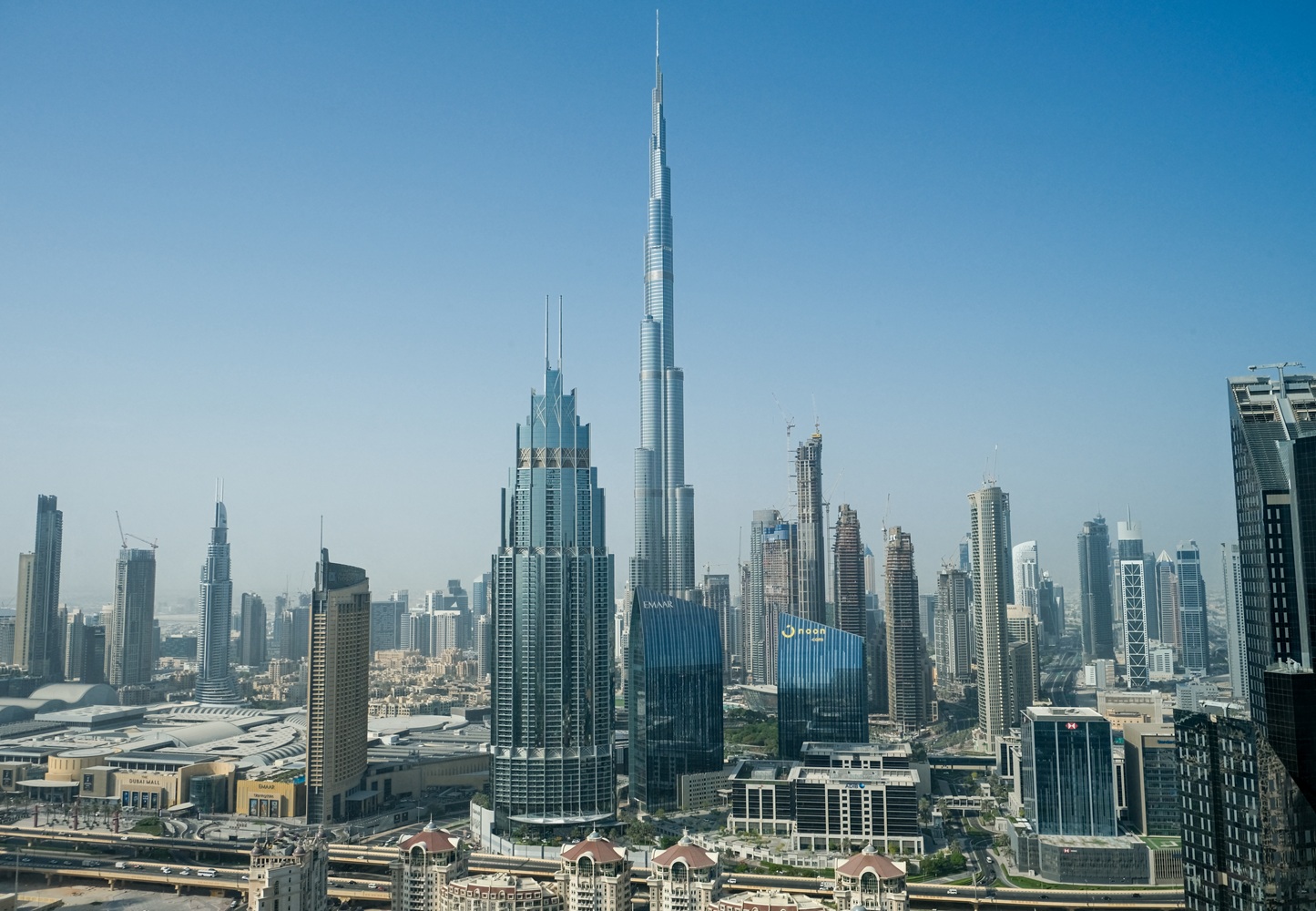
The Burj Khalifa in Dubai

The Burj Khalifa in Dubai is one of the most iconic structures in the world. It’s also one of the highest ones up until now with 828 meters tall. But did you know that it is also an earthquake-proof building? Yes.
Its base and foundation were carefully planned through extensive studies of the ground and the building’s potential reactions during earthquakes. Both ensures the building remains safe and steady.
The Burj Khalifa has special mechanical floors where walls called ‘outriggers’ connect the outer columns of the building to the center core.
As a result, the Burj Khalifa is not only the tallest but also the most resistant to earthquakes. It’s powerful, stable, and doesn’t sway much from side to side or twist.